

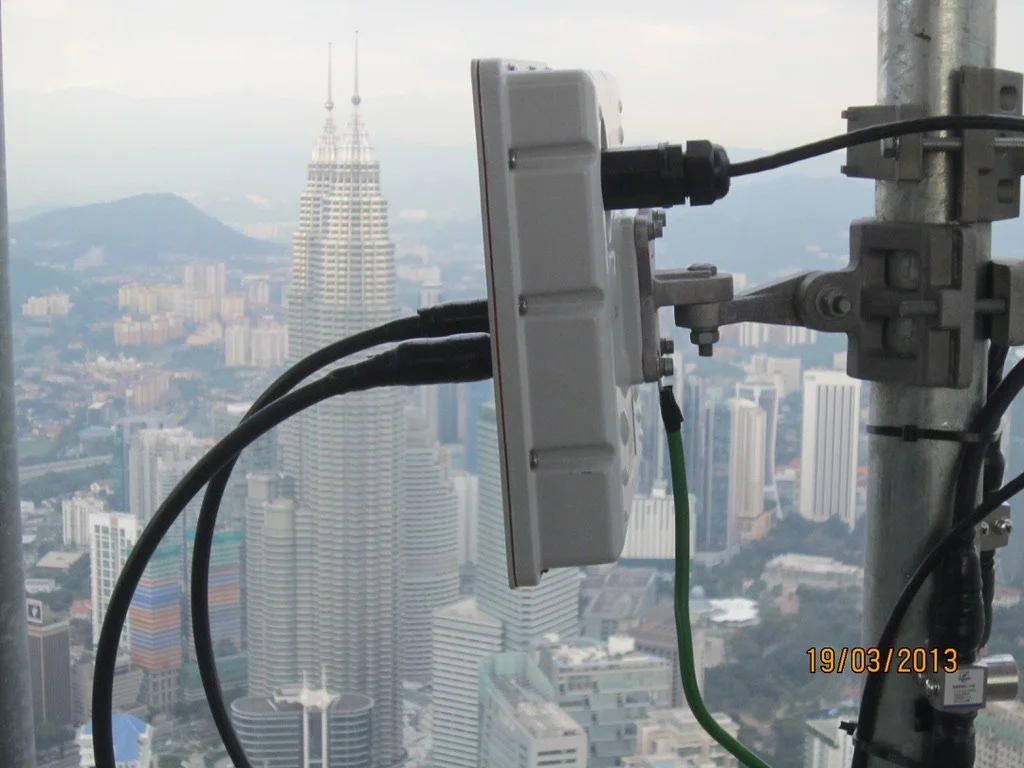
This intensive 5-day program builds a solid foundation in radio frequency (RF) theory and wireless network fundamentals for engineers, technicians, and IT professionals entering or advancing in the wireless field.
Participants will learn core RF concepts — propagation, antennas, link budgets, modulation, and spectrum management — alongside practical, hands-on exposure to real-world wireless technologies including Wi-Fi, cellular, and fixed wireless systems.
By the end of the course, attendees will have the technical knowledge and confidence to plan, design, and troubleshoot wireless networks, setting the stage for more advanced, technology-specific training.
Basic Radio and RF Concepts
RF Energy
RF Generation, Transmission, and Reception
Oscillators and Power Amplifiers
dB and dBm power conversions
Digital Modulation of RF Signals
Amplitude, Frequency Modulation, QAM & QPSK
Filtering
Equalizers
Multiple Access Techniques
TDMA, FDMA, CDMA
OFDM, W-OFDM, SOFDMA
Duplexing, TDD vs. FDD
Channel Coding
Spread-Spectrum Modulation
RF Propagation Principles
Path / Propagation Losses
Fading
Fade Margin and Fresnel Zone
Link Budgets
Receiver Sensitivity
Noise Figure
Guard Band
BER vs. Noise
Link Budget and High-Level System Design
Sample Link Budget Calculations
Antennas
Antennas Basics
Effective Radiated Power (ERP)
Directivity and Gain Antenna Types
Antenna Radiation Patterns
Polarization
Diversity Antenna Systems
MIMO Antenna Systems
System Planning
Wireless Topologies: PTP and PMP
LOS, NrLOS, NLOS
Licensed & Unlicensed Frequency Bands
Frequency Planning
Frequency Reuse
RF Site Survey
RF Site Survey Tool
This intensive 5-day program builds a solid foundation in radio frequency (RF) theory and wireless network fundamentals for engineers, technicians, and IT professionals entering or advancing in the wireless field.
Participants will learn core RF concepts — propagation, antennas, link budgets, modulation, and spectrum management — alongside practical, hands-on exposure to real-world wireless technologies including Wi-Fi, cellular, and fixed wireless systems.
By the end of the course, attendees will have the technical knowledge and confidence to plan, design, and troubleshoot wireless networks, setting the stage for more advanced, technology-specific training.
Basic Radio and RF Concepts
RF Energy
RF Generation, Transmission, and Reception
Oscillators and Power Amplifiers
dB and dBm power conversions
Digital Modulation of RF Signals
Amplitude, Frequency Modulation, QAM & QPSK
Filtering
Equalizers
Multiple Access Techniques
TDMA, FDMA, CDMA
OFDM, W-OFDM, SOFDMA
Duplexing, TDD vs. FDD
Channel Coding
Spread-Spectrum Modulation
RF Propagation Principles
Path / Propagation Losses
Fading
Fade Margin and Fresnel Zone
Link Budgets
Receiver Sensitivity
Noise Figure
Guard Band
BER vs. Noise
Link Budget and High-Level System Design
Sample Link Budget Calculations
Antennas
Antennas Basics
Effective Radiated Power (ERP)
Directivity and Gain Antenna Types
Antenna Radiation Patterns
Polarization
Diversity Antenna Systems
MIMO Antenna Systems
System Planning
Wireless Topologies: PTP and PMP
LOS, NrLOS, NLOS
Licensed & Unlicensed Frequency Bands
Frequency Planning
Frequency Reuse
RF Site Survey
RF Site Survey Tool